
Back to Portfolio

Enterprise SaaS
Research
Systems Design
Hipoges Operations Platform
A multi-department enterprise tool redesigned into a unified and efficient operating system through deep research and scalable patterns.

Context
Hipoges manages complex real estate and financial portfolios across Spain, Portugal, and Italy.
Their internal tool, HAMS, had grown organically for years, accumulating inconsistent UI, disjointed workflows and department-specific workarounds. Every team used the platform differently and none of those experiences were aligned.


Role
Product Designer, UX Researcher, UX Designer.

Timeline
May 2023 - August 2023

Team
2 UX Designers working with PMs, department leads and developer teams across multiple countries.

Scope
Redesign of HAMS, Hipoges’ internal platform, to improve its daily used by legal, operations, asset management, valuations and portfolio teams.
Impact
Unified fragmented workflows across teams, reduced operational friction, and established a scalable interface and pattern library to support future processes and growth.
Operational Challenges
Cross-department issues

Workflows varied drastically between teams, even for similar tasks
Navigation lacked hierarchy and predictability
High cognitive load due to cluttered interfaces
Redundant manual steps across multiple teams
Business challenges
Hard to onboard new employees due to tool complexity
Inefficiencies caused delays in asset and case management
UI inconsistency made maintenance and feature releases slow
No scalable system for future growth or market expansion

My approach
5
Build design system foundations
Established patterns, components, and behaviours to make the platform scalable, easier to maintain, and faster to evolve.
1
Deep multi-department research
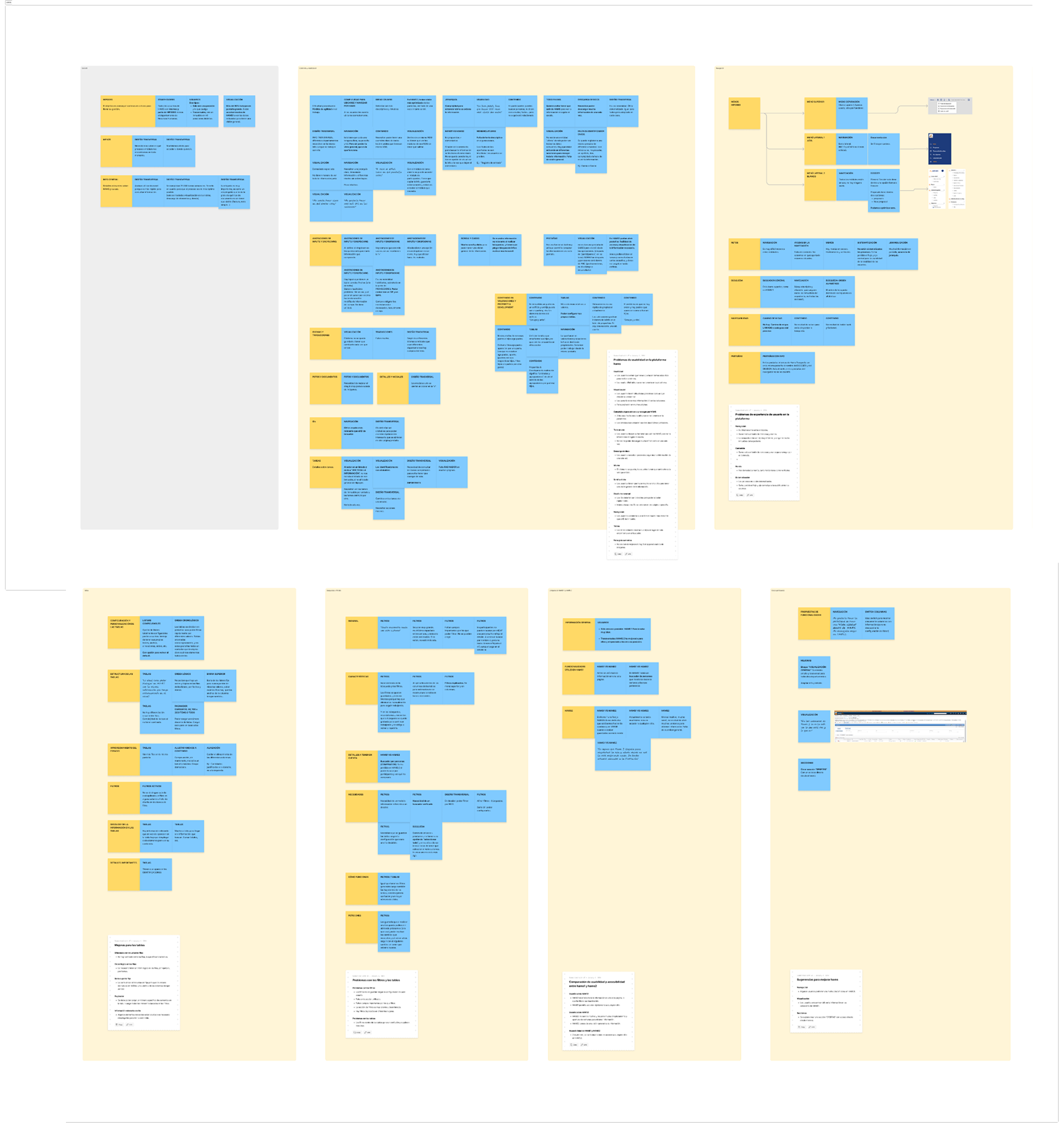
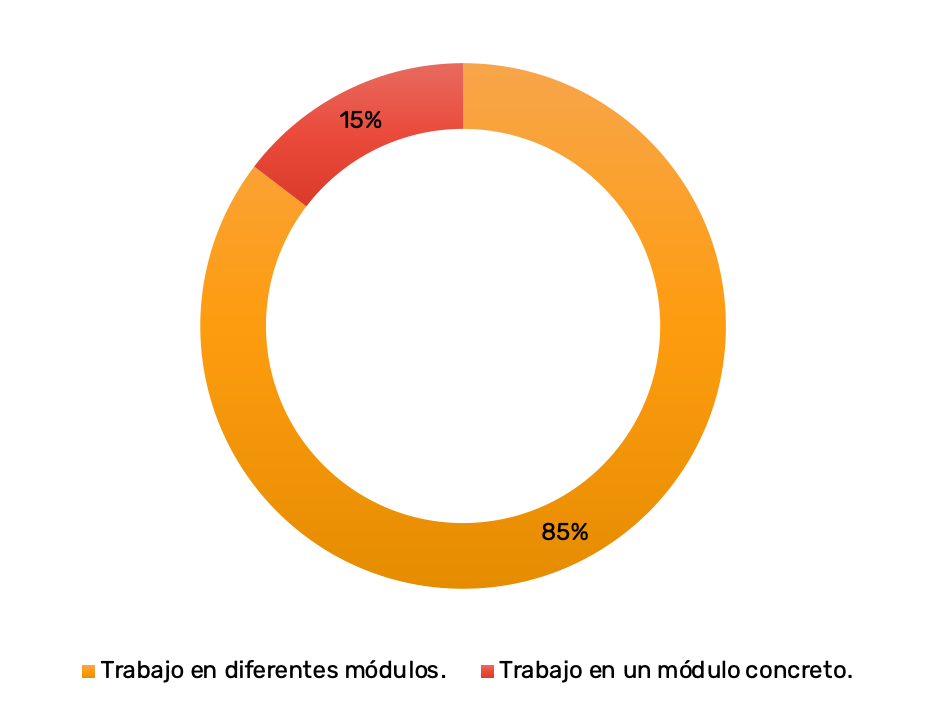
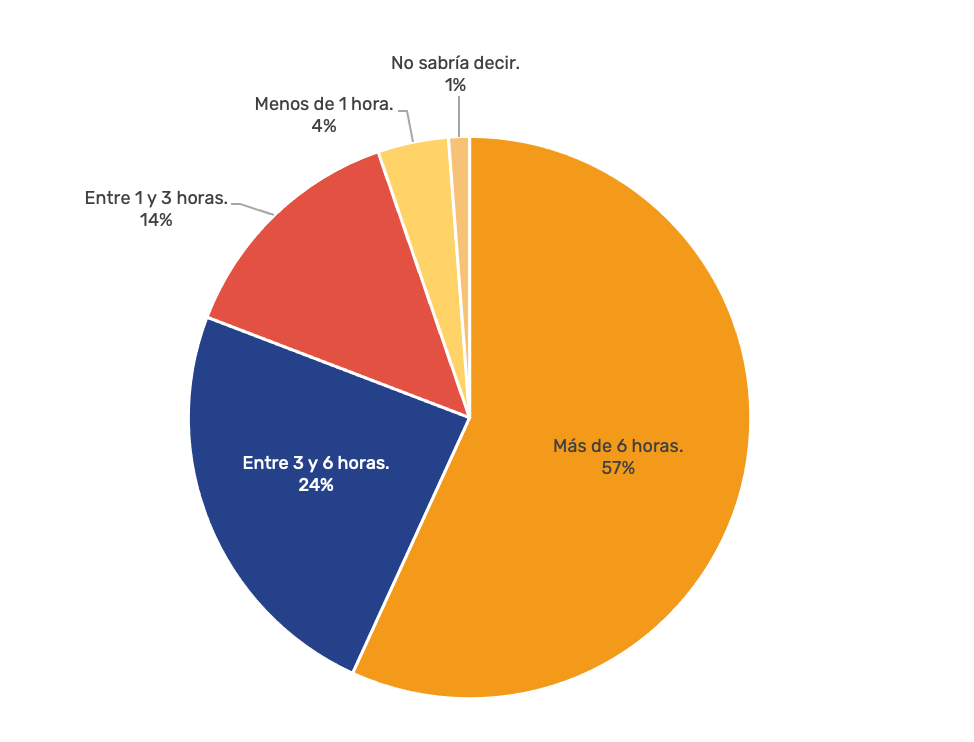
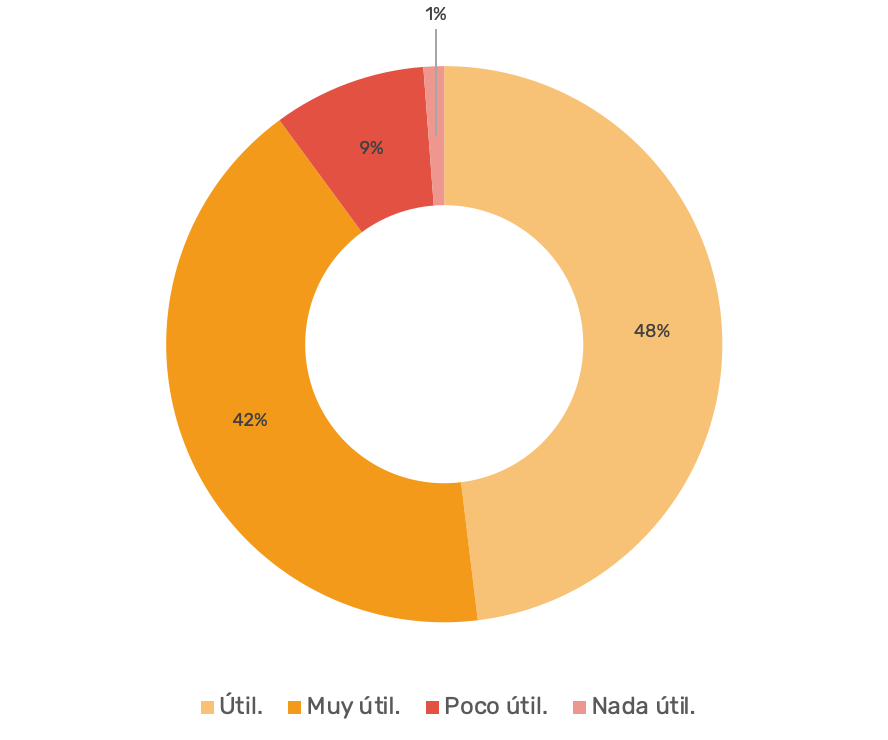
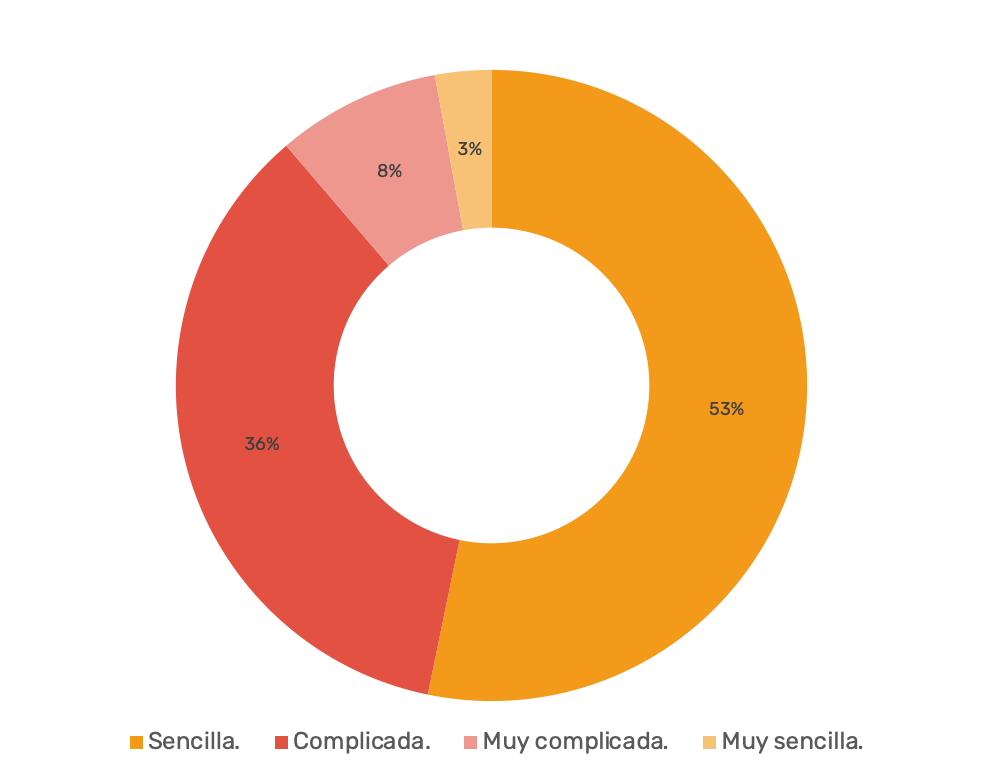
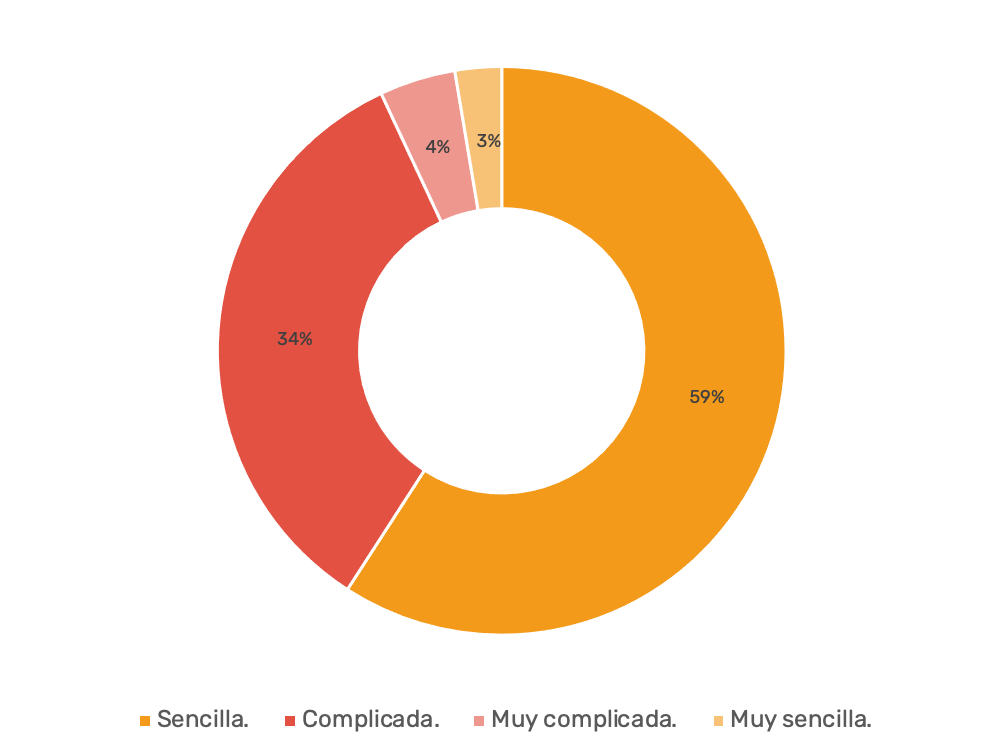
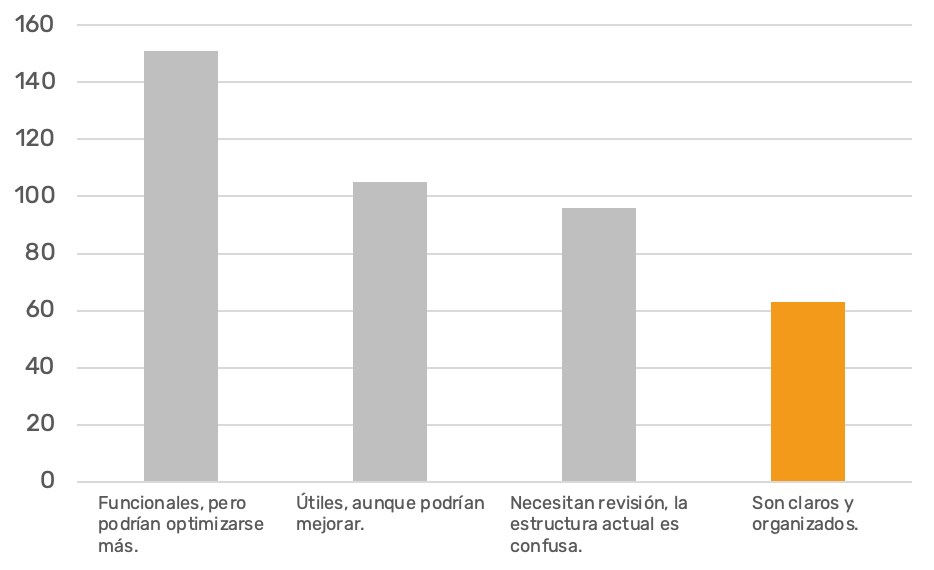
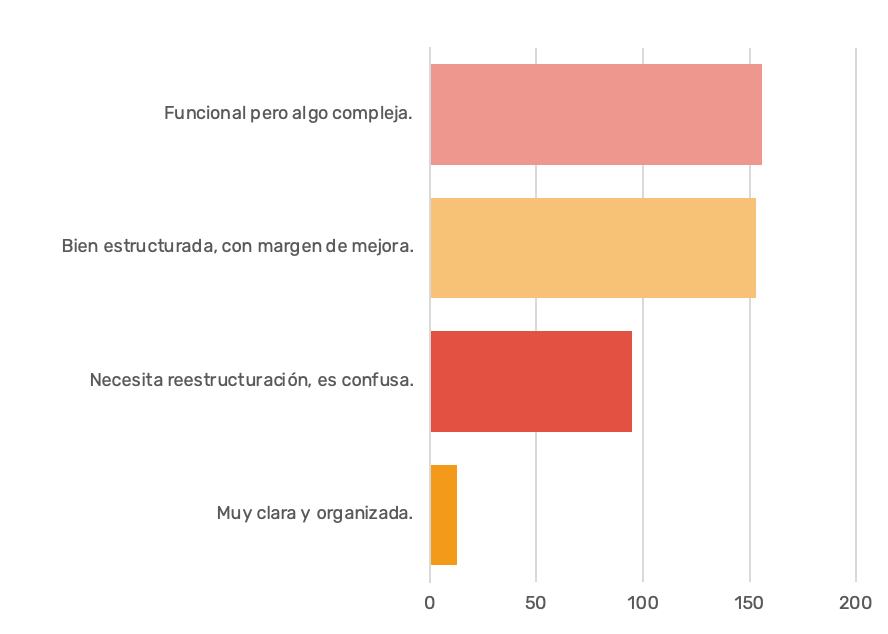
Conducted interviews, workflow observations and mapping sessions with legal, operations, asset managers, valuations and portfolio teams.
Outcome: a full picture of how work flowed across the company, and where it broke.
2
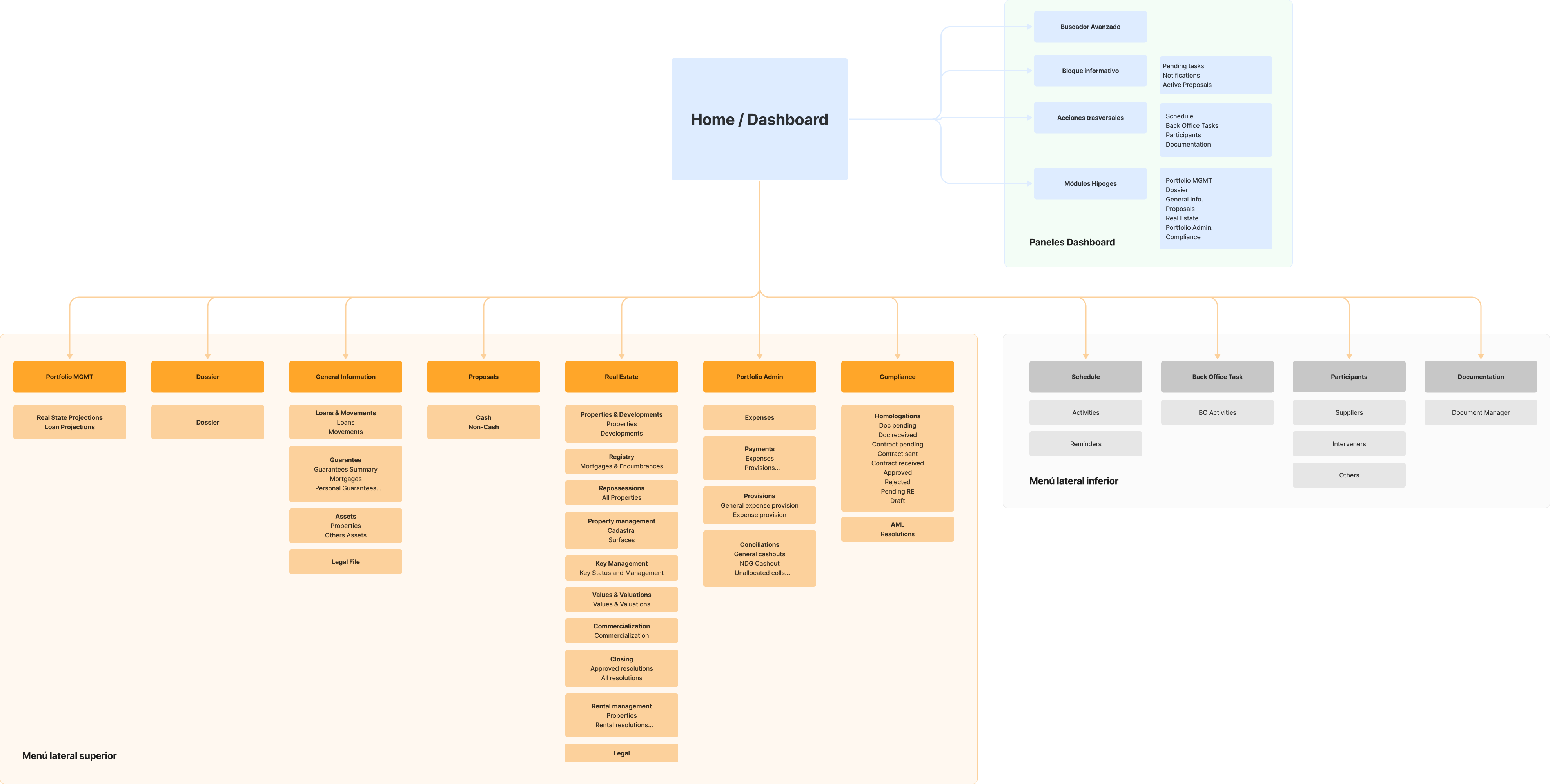
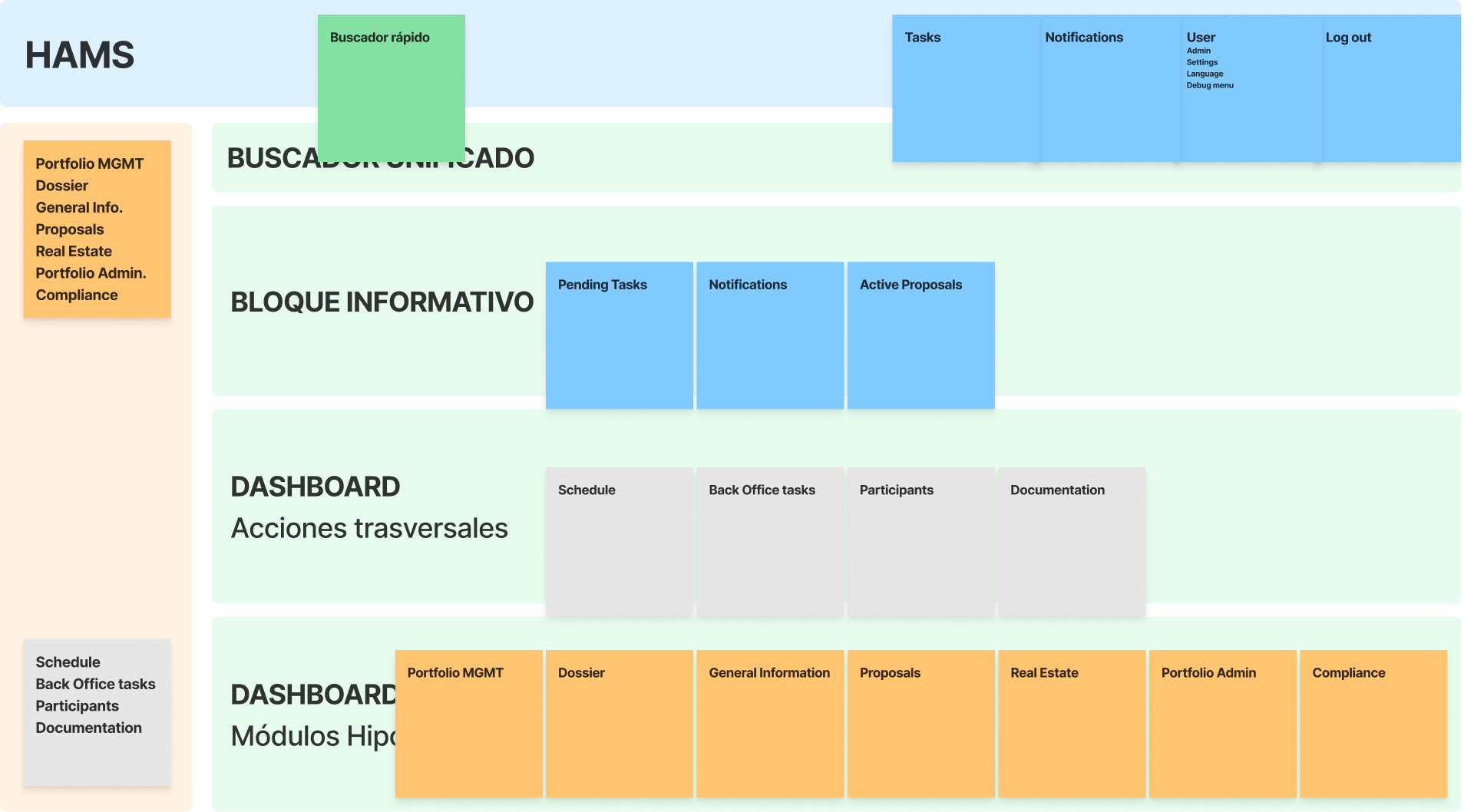
Consolidate workflows into a unified structure
Identified common tasks, eliminated redundant steps, and reorganised the information architecture around clarity and standardisation. Goal: one platform tha t adapts to multiple departments without fragmenting the experience.
Goal: one product, one mental model tha t adapts to multiple departments without fragmenting the experience.
3
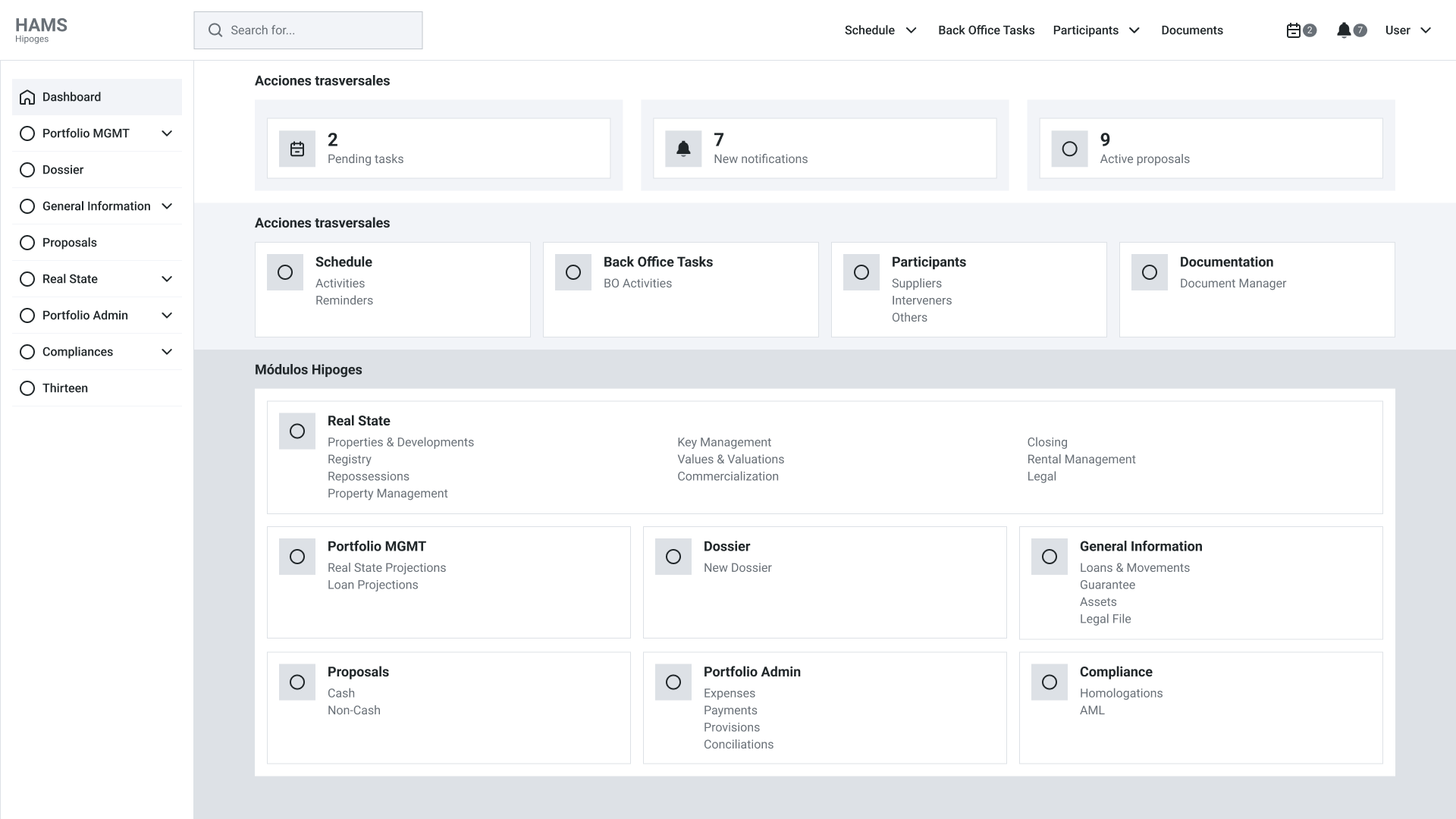
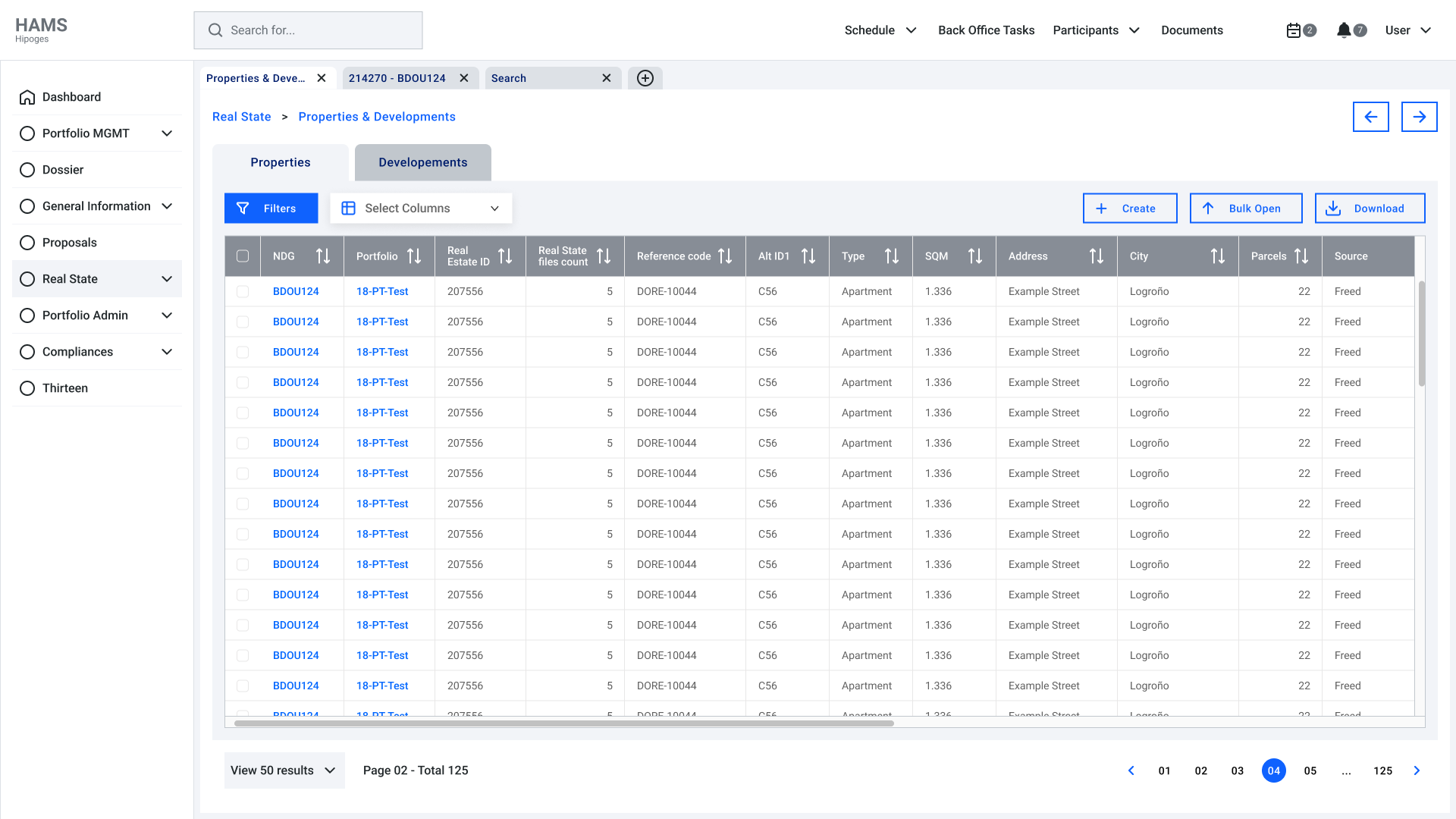
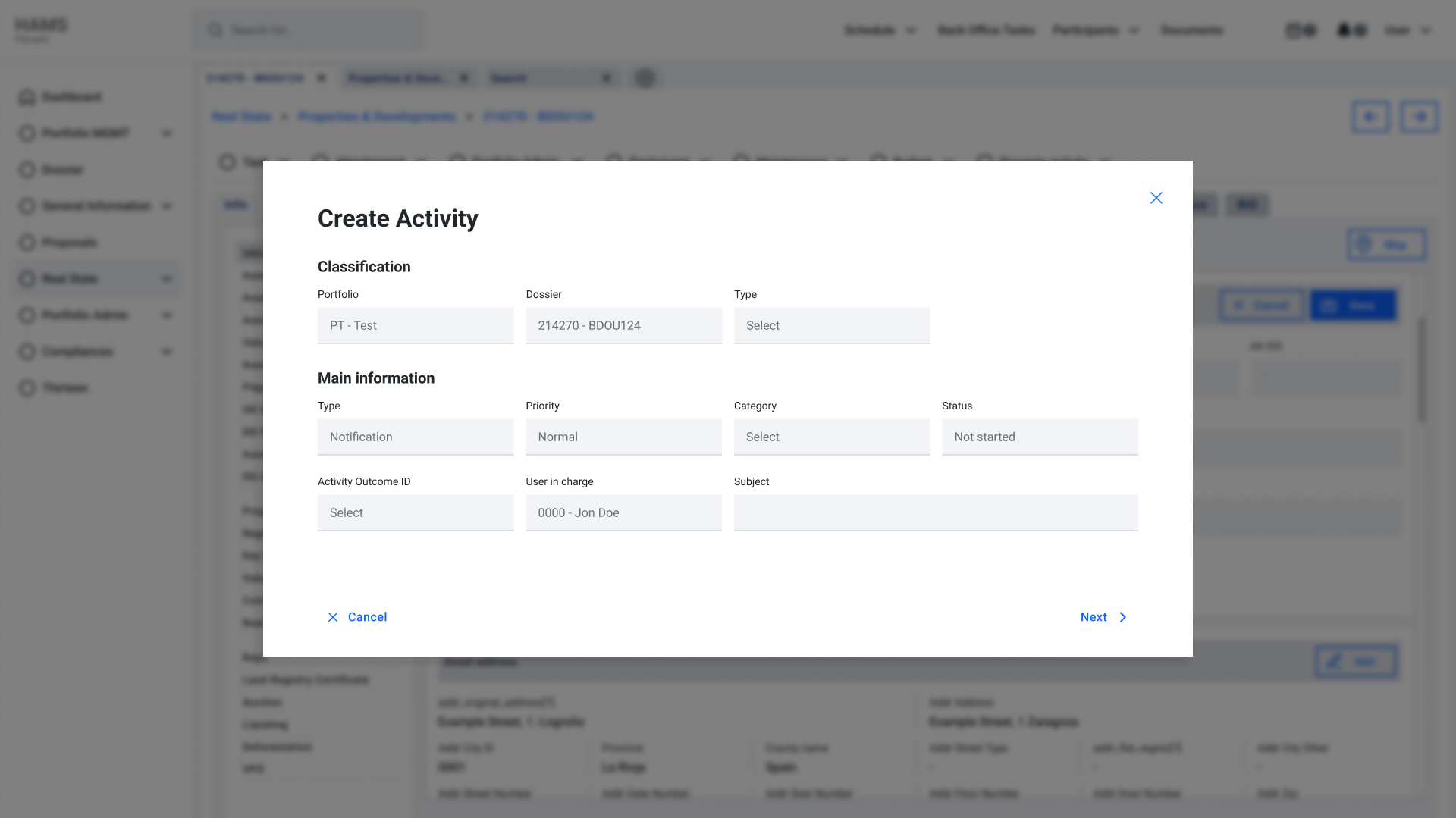
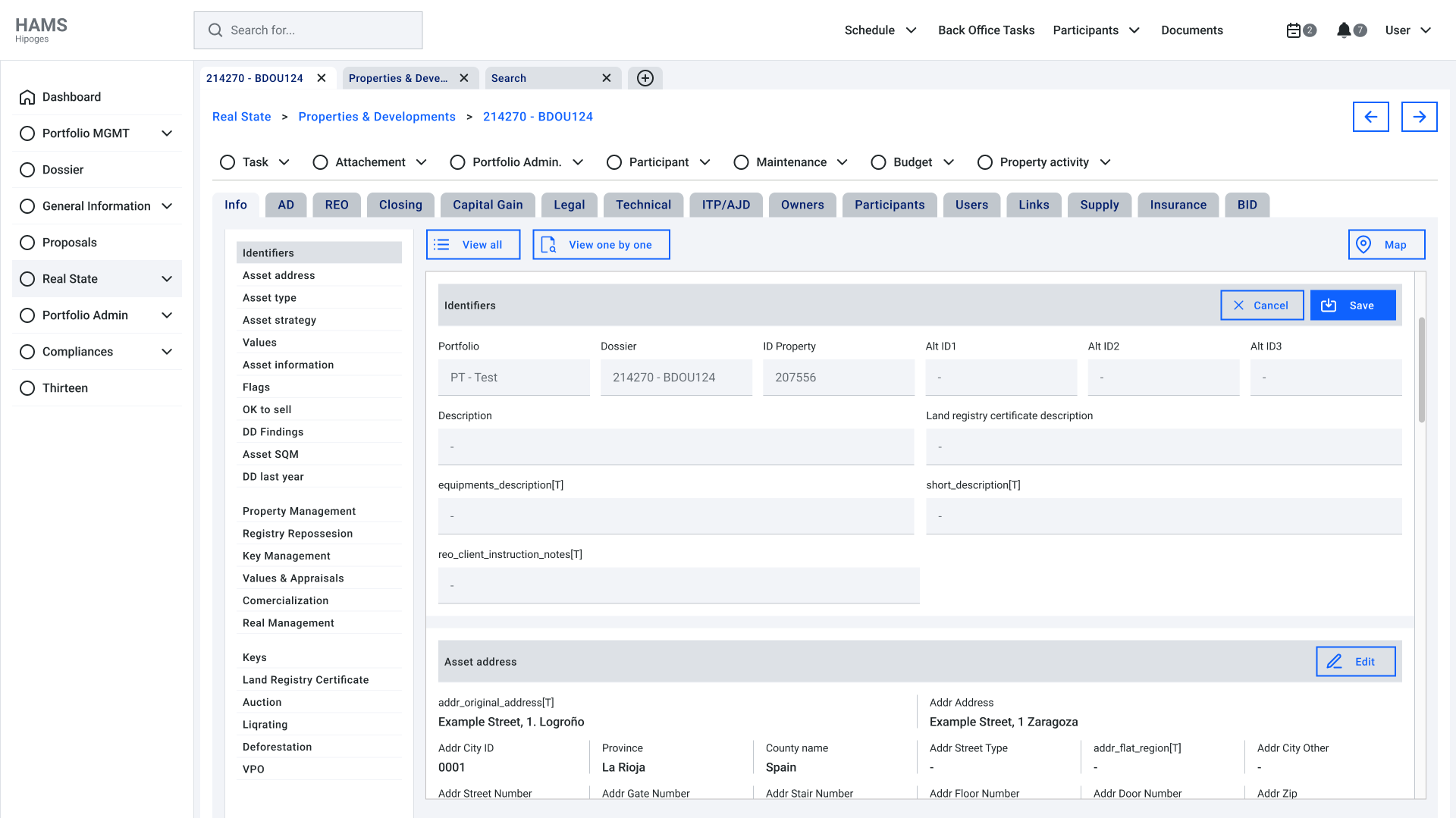
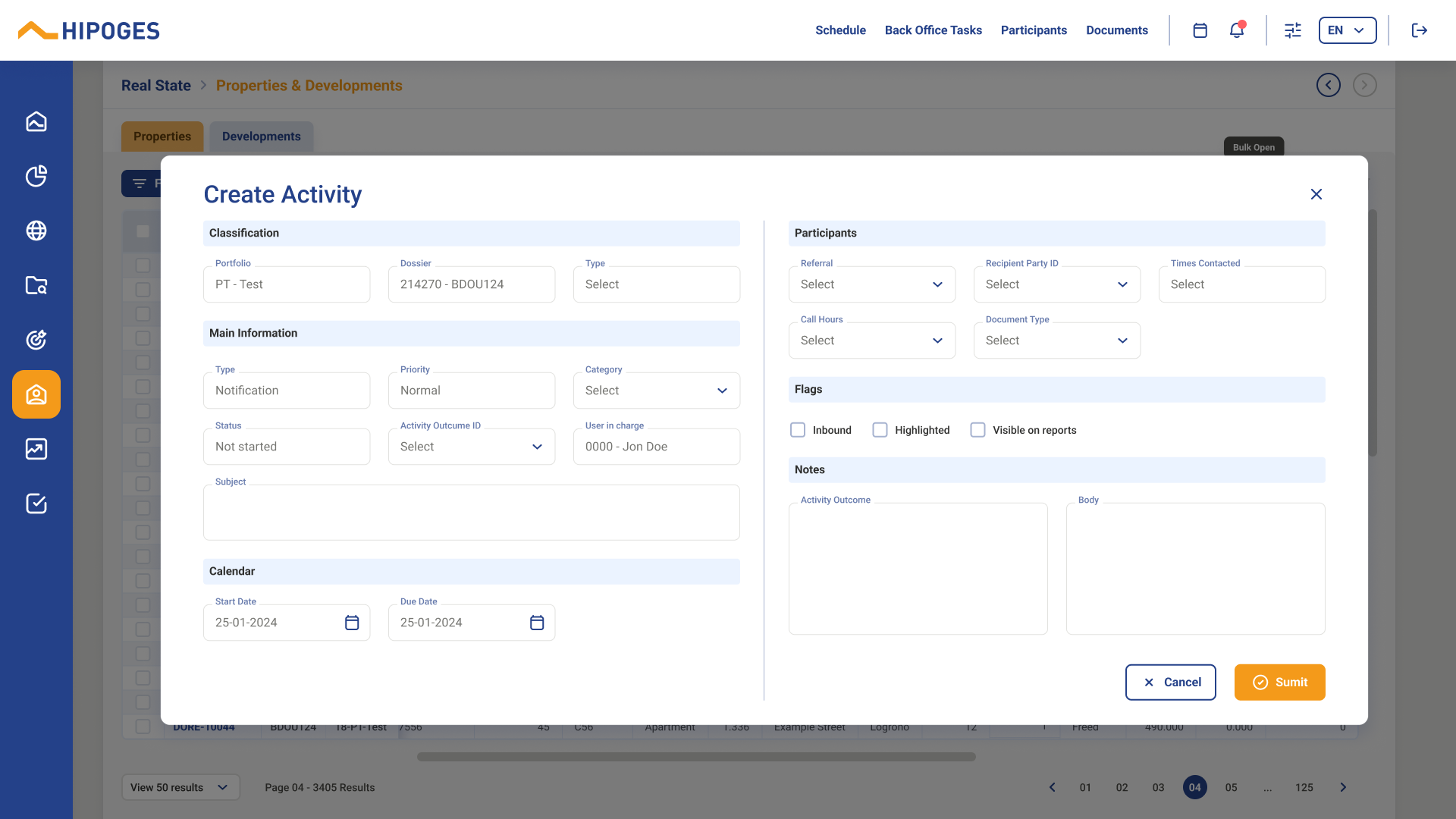
Wireframing: Redesign core interfaces with scalable patterns
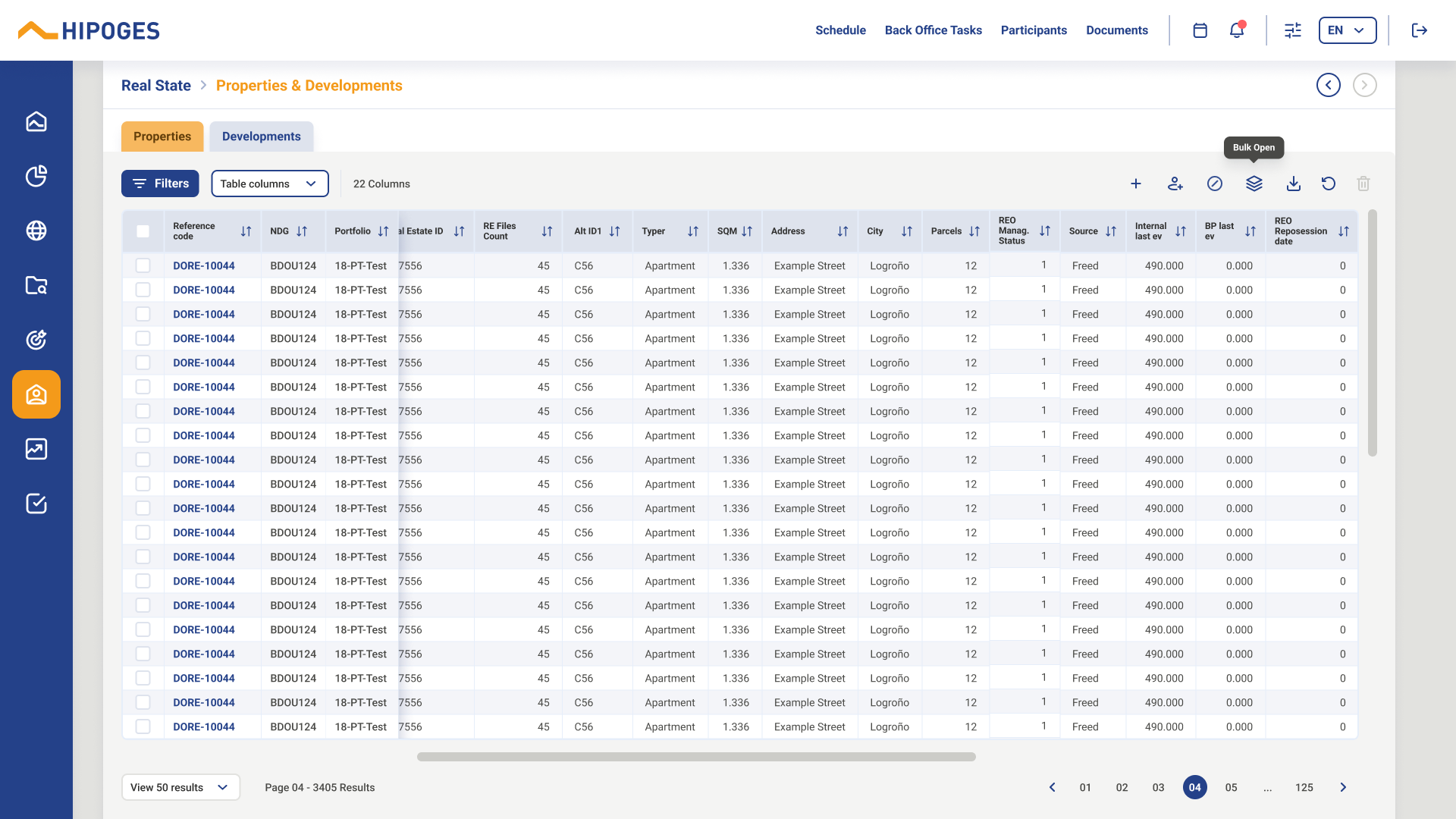
Created improved data layouts, consistent table and form patterns, and a clearer hierarchy for complex case and asset details, along with navigation that reflects real operational processes.
Each component was designed to work across departments, not for a single use case.
4
Validate through iterative testing
Ran sessions with representatives from each team to ensure the new structure reflected real needs.
Refined copy, hierarchy, and flow clarity based on feedback.
Outcome
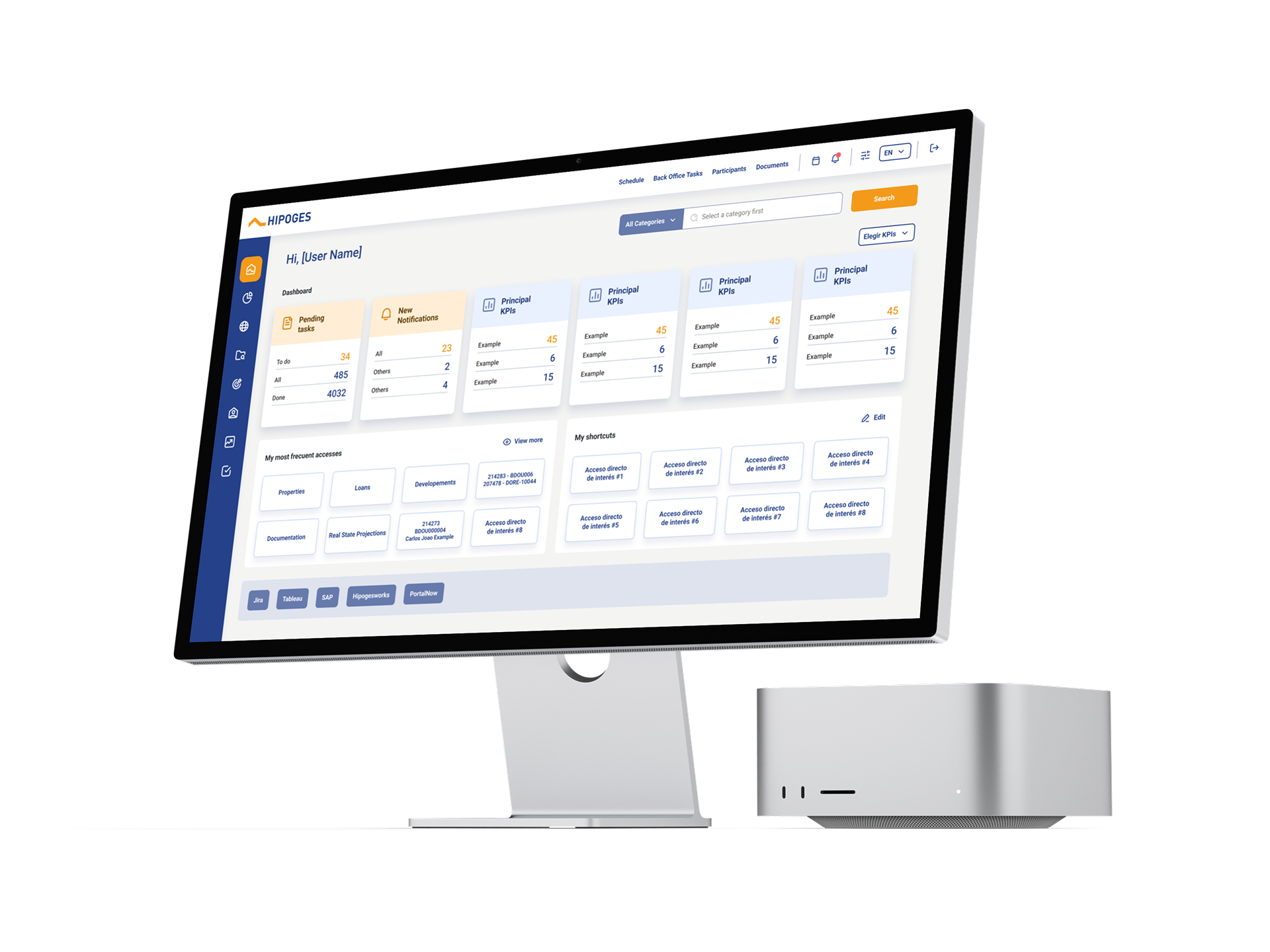
The redesigned platform gave Hipoges a clear, unified, and scalable internal operating system, replacing years of accumulated complexity.
It delivered
Consistent interfaces across all departments
Reduced errors and operational friction
Faster onboarding for new employees
More efficient workflows with fewer manual steps
A foundation for continued growth and feature development

Back to Portfolio
Want to check other projects?
View MySantander
View Rustskill
Back to Portfolio
Enterprise SaaS
Research
Systems Design
Hipoges Operations Platform
A multi-department enterprise tool redesigned into a unified and efficient operating system through deep research and scalable patterns.

Context
Hipoges manages complex real estate and financial portfolios across Spain, Portugal, and Italy.
Their internal tool, HAMS, had grown organically for years, accumulating inconsistent UI, disjointed workflows and department-specific workarounds. Every team used the platform differently and none of those experiences were aligned.

Role
Product Designer, UX Researcher, UX Designer.
Timeline
May 2023 - August 2023
Team
2 UX Designers working with PMs, department leads and developer teams across multiple countries.
Scope
Redesign of HAMS, Hipoges’ internal platform, to improve its daily used by legal, operations, asset management, valuations and portfolio teams.
Impact
Unified fragmented workflows across teams, reduced operational friction, and established a scalable interface and pattern library to support future processes and growth.
Operational Challenges
Cross-department issues
Workflows varied drastically between teams, even for similar tasks
Navigation lacked hierarchy and predictability
High cognitive load due to cluttered interfaces
Redundant manual steps across multiple teams
Business challenges
Hard to onboard new employees due to tool complexity
Inefficiencies caused delays in asset and case management
UI inconsistency made maintenance and feature releases slow
No scalable system for future growth or market expansion
My approach
5
Build design system foundations
Established patterns, components, and behaviours to make the platform scalable, easier to maintain, and faster to evolve.
1
Deep multi-department research
Conducted interviews, workflow observations and mapping sessions with legal, operations, asset managers, valuations and portfolio teams.
Outcome: a full picture of how work flowed across the company, and where it broke.
2
Consolidate workflows into a unified structure
Identified common tasks, eliminated redundant steps, and reorganised the information architecture around clarity and standardisation. Goal: one platform tha t adapts to multiple departments without fragmenting the experience.
Goal: one product, one mental model tha t adapts to multiple departments without fragmenting the experience.
3
Wireframing: Redesign core interfaces with scalable patterns
Created improved data layouts, consistent table and form patterns, and a clearer hierarchy for complex case and asset details, along with navigation that reflects real operational processes.
Each component was designed to work across departments, not for a single use case.
4
Validate through iterative testing
Ran sessions with representatives from each team to ensure the new structure reflected real needs.
Refined copy, hierarchy, and flow clarity based on feedback.
Outcome
The redesigned platform gave Hipoges a clear, unified, and scalable internal operating system, replacing years of accumulated complexity.
It delivered
Consistent interfaces across all departments
Reduced errors and operational friction
Faster onboarding for new employees
More efficient workflows with fewer manual steps
A foundation for continued growth and feature development
Back to Portfolio
Want to check other projects?
View MySantander
View Rustskill
Back to Portfolio
Enterprise SaaS
Research
Systems Design
Hipoges Operations Platform
A multi-department enterprise tool redesigned into a unified and efficient operating system through deep research and scalable patterns.

Context
Hipoges manages complex real estate and financial portfolios across Spain, Portugal, and Italy.
Their internal tool, HAMS, had grown organically for years, accumulating inconsistent UI, disjointed workflows and department-specific workarounds. Every team used the platform differently and none of those experiences were aligned.

Role
Product Designer, UX Researcher, UX Designer.
Timeline
May 2023 - August 2023
Team
2 UX Designers working with PMs, department leads and developer teams across multiple countries.
Scope
Redesign of HAMS, Hipoges’ internal platform, to improve its daily used by legal, operations, asset management, valuations and portfolio teams.
Impact
Unified fragmented workflows across teams, reduced operational friction, and established a scalable interface and pattern library to support future processes and growth.
Operational Challenges
Cross-department issues
Workflows varied drastically between teams, even for similar tasks
Navigation lacked hierarchy and predictability
High cognitive load due to cluttered interfaces
Redundant manual steps across multiple teams
Business challenges
Hard to onboard new employees due to tool complexity
Inefficiencies caused delays in asset and case management
UI inconsistency made maintenance and feature releases slow
No scalable system for future growth or market expansion
My approach
5
Build design system foundations
Established patterns, components, and behaviours to make the platform scalable, easier to maintain, and faster to evolve.
1
Deep multi-department research
Conducted interviews, workflow observations and mapping sessions with legal, operations, asset managers, valuations and portfolio teams.
Outcome: a full picture of how work flowed across the company, and where it broke.
2
Consolidate workflows into a unified structure
Identified common tasks, eliminated redundant steps and reorganised the information architecture around clarity and standardisation.
Goal: one product, one mental model tha t adapts to multiple departments without fragmenting the experience.
3
Wireframing: Redesign core interfaces with scalable patterns
Created improved data layouts, consistent table and form patterns, and a clearer hierarchy for complex case and asset details, along with navigation that reflects real operational processes.
Each component was designed to work across departments, not for a single use case.
4
Validate through iterative testing
Ran sessions with representatives from each team to ensure the new structure reflected real needs.
Refined copy, hierarchy, and flow clarity based on feedback.
Outcome
The redesigned platform gave Hipoges a clear, unified, and scalable internal operating system, replacing years of accumulated complexity.
It delivered
Consistent interfaces across all departments
Reduced errors and operational friction
Faster onboarding for new employees
More efficient workflows with fewer manual steps
A foundation for continued growth and feature development
Back to Portfolio
Want to check other projects?
View MySantander
View Rustskill